Free Template
Commercial Property Inspection Checklist
A complete checklist for office, retail, and industrial properties, from the roof to the parking lot.
No credit card required. 14-day free trial.
Commercial inspections cover more ground than a rental unit, and the stakes are bigger. You are documenting building systems, life-safety equipment, common areas, and tenant spaces, often across thousands of square feet.
The checklist below walks a typical commercial property in a logical order so nothing gets missed. Photograph every issue, and keep your documentation consistent from one inspection to the next.
Walk the property in this order and photograph anything you flag.
Follow the same route every time. Consistency is what makes commercial documentation credible. Walk the property in the same order, inspect the same items, and hold the same photo standard on every visit.
Document life safety carefully. Fire extinguishers, exits, alarms, and sprinklers carry real liability and compliance weight. Photograph tags and conditions so you have a dated record if anything is ever questioned.
Separate tenant issues from building issues. Note which deficiencies are the owner's responsibility and which fall on a tenant under their lease. Clear records make cost recovery and lease enforcement far easier.
Rank what you find. Flag each deficiency by severity so the owner knows what needs attention now versus what can wait. A prioritized report is far more useful than a flat list.
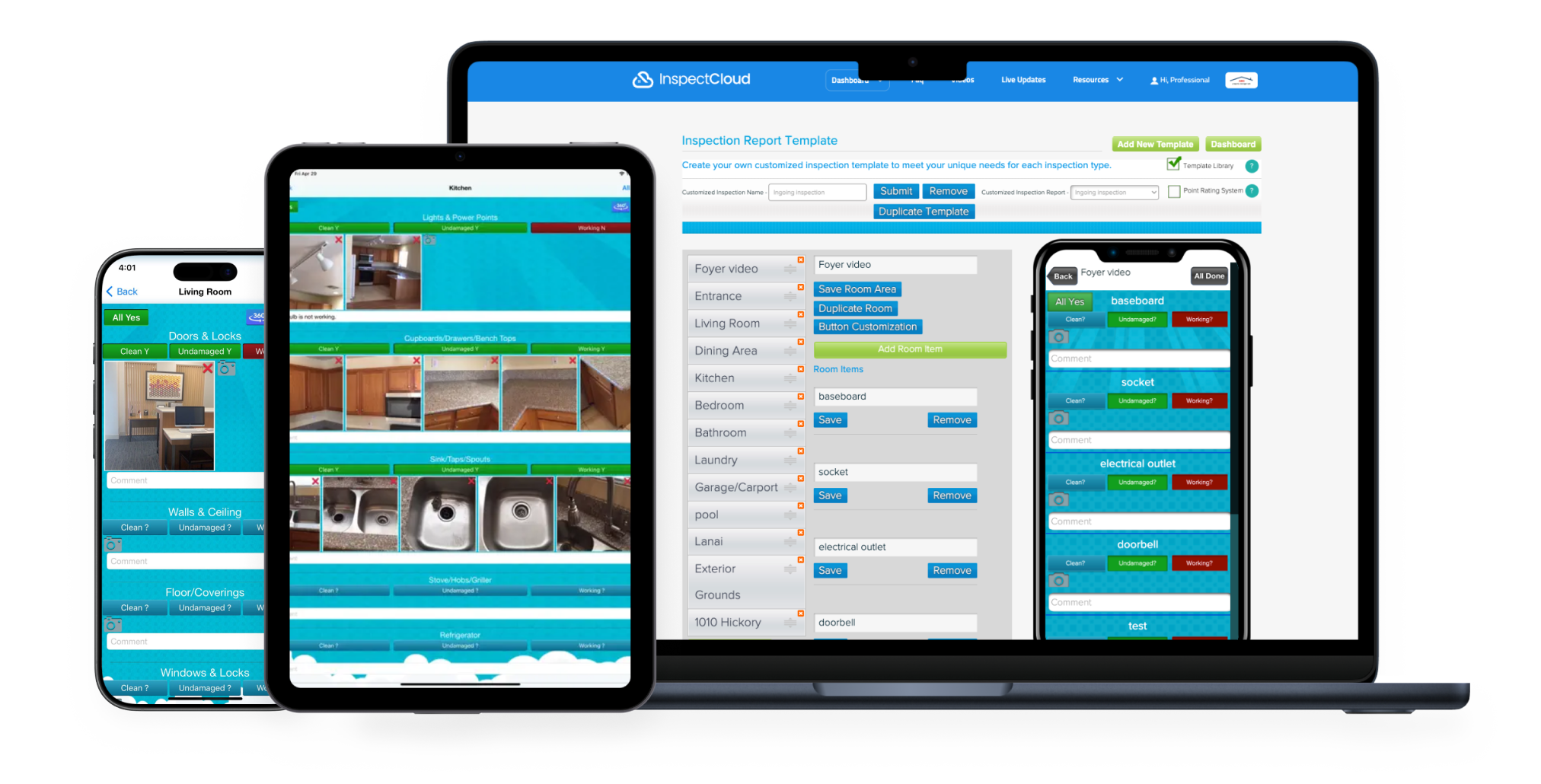
InspectCloud runs this exact checklist on any phone or tablet and does the tedious parts for you.
Check a box, snap a photo, capture a signature. Everything drops into a clean, branded PDF report automatically.
Pick two inspections and the software highlights every difference in a side-by-side comparison. What used to take 20 to 30 minutes per unit takes about three seconds.
Resident Inspection lets tenants complete their own move-in inspection on their phone, so the documentation exists before a dispute ever comes up. It is included with every plan.
Room-by-room checklist for move-in, move-out, and routine rental inspections.
Document condition at move-in and move-out to protect deposits and win disputes.
The complete guide, plus free checklists for every property type.
The building exterior and roof, parking and grounds, common areas, HVAC and mechanical systems, electrical and plumbing, fire and life-safety equipment, tenant and leased spaces, and a final documentation step with photos, severity ratings, and a signature.
Most owners run a full property inspection quarterly or semi-annually, with more frequent checks on life-safety equipment and high-traffic areas. Your lease terms, insurance, and local codes may set specific requirements.
Property managers, facility managers, or the owner's staff typically handle routine inspections. Specialized systems like elevators, fire suppression, and structural elements are usually inspected by licensed professionals on their own schedule.
Commercial inspections cover larger buildings, more mechanical systems, shared common areas, and stricter life-safety and compliance requirements. They also separate landlord responsibilities from tenant obligations under the lease.
Yes. InspectCloud lets you build a custom commercial template, inspect from a phone or tablet with photos and severity notes, and generate a branded report you can send to owners instantly.
Try InspectCloud free. Build a custom commercial template, inspect from a tablet, and deliver a branded report the same day.